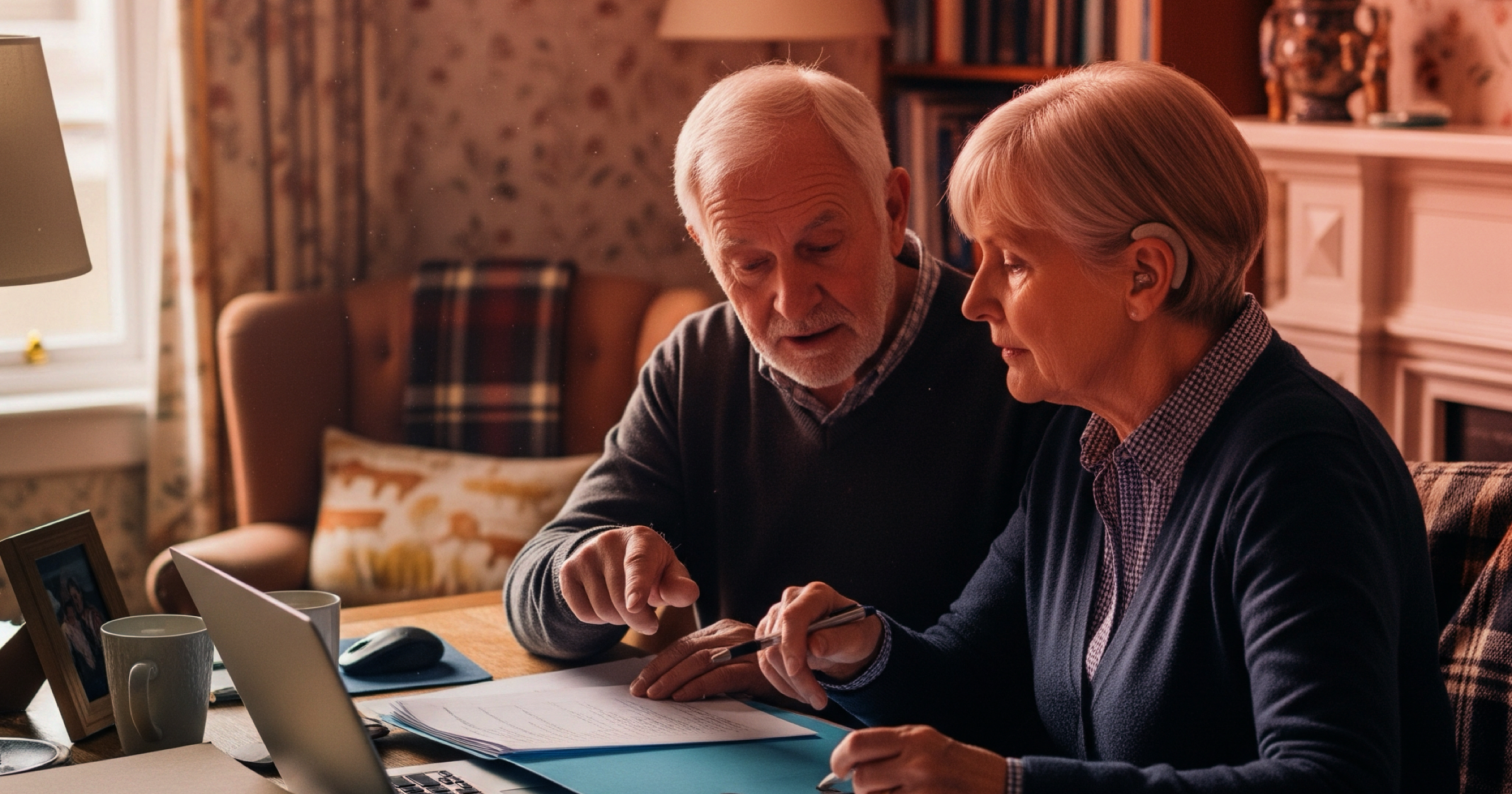
Can I do my own Lasting Power Of Attorney?
By Matt Cresswell, Founder of Power of Attorney Online and author of
Everything you ever wanted to know about LPAs (but were afraid to ask)
28th January 2026

The short answer:
You do not need a solicitor to make a Lasting Power of Attorney. The official GOV.UK service allows you to create an LPA online, and the government also provides paper forms. You can complete the process yourself, or ask someone such as a family member, friend or solicitor to help you. There are two types of LPA: A Property and Financial Affairs LPA lets your attorneys deal with financial matters on your behalf, such as bank accounts, bills, property and other financial affairs; and a A Health and Welfare LPA covers decisions about things such as care, daily routine, where you live and certain medical decisions. You can make either one or both. The government registration fee is currently £92 per LPA, so registering both types costs £184 before any additional support or professional fees. Reductions and exemptions are available for people who meet the relevant financial criteria. So, if your situation is straightforward and you are comfortable working through the official guidance carefully, DIY is a perfectly legitimate option. The catch is accuracy. That is where the choice becomes more interesting.
Updated: Tuesday 8th September 2026
If you are wondering Can I Do My Own LPA? has been designed to answer the question properly, because the short answer is yes. You can make a Lasting Power of Attorney yourself without using a solicitor, either through the official GOV.UK online service or using the paper forms. The government does not require you to pay a solicitor or specialist provider to create an LPA. But there is an important difference between being legally entitled to do something yourself and finding the process easy to get right. An LPA is a legal document with specific requirements around the people you appoint, how attorneys can act, certificate providers, preferences and instructions, signatures, witnesses and registration. A mistake can delay the application or lead to rejection. So the real decision is not simply whether you can do your own LPA. It is whether you want to do everything yourself, pay for guided online support, or use a solicitor for more personalised legal advice.
What does “doing your own LPA” actually mean?
Doing your own LPA doesn’t mean inventing your own legal document. You still have to use the official LPA process and satisfy the requirements of the OPG.
The DIY route usually means that you take responsibility for:
- choosing the right type of LPA;
- deciding who your attorneys should be;
- deciding how multiple attorneys can act;
- considering replacement attorneys;
- choosing a suitable certificate provider;
- deciding whether you need preferences or instructions;
- completing the application;
- checking all the details;
- organising the signing and witnessing;
- and registering the completed LPA with the OPG.
That sounds straightforward when written as a list. In practice, some of the decisions are surprisingly easy to misunderstand.
For example, if you appoint two attorneys, should they have to make every decision together, or should either of them be able to act independently? If you want to express your wishes about how your attorneys act, should that go into a preference or an instruction? Do you actually need to put anything in that section at all? Who can act as your certificate provider? What happens if one of your attorneys dies or becomes unable to act?
These are not necessarily questions for a solicitor. But they are questions you should understand before you sign.
DIY, online or solicitor? The three routes compared
There are essentially three ways to make an LPA.
You can do everything yourself through GOV.UK. You can use a specialist online LPA service. Or you can ask a solicitor to prepare the LPA for you.
None of these routes is automatically more legally valid than the others.
The finished document has to meet the same underlying legal requirements and be registered with the OPG. The difference is the level of support around the process.
| Option | Preparation cost | OPG fee | Level of support | Best suited to |
|---|---|---|---|---|
| GOV.UK DIY | Free | £92 per LPA | Official guidance | Straightforward cases where you are confident doing it yourself |
| Specialist online service | £125 per LPA at POA Online | £92 per LPA | Guided application, review and support | People wanting reassurance without full solicitor costs |
| Solicitor | Varies | £92 per LPA | Personalised legal advice | Complex circumstances or people wanting bespoke legal advice |
The government route is genuinely free to use. The £92 registration fee is separate.
A paid online service is charging for support around the process. A solicitor is charging for professional legal work and advice. That distinction is important when comparing prices.
The biggest advantage of doing it yourself is cost
If you are comfortable with the official forms, DIY is difficult to beat on price.
You pay the £92 OPG registration fee and do the rest yourself. For two LPAs, that is £184 in registration fees. There is no preparation fee from GOV.UK.
The trade-off is that you are responsible for understanding and checking the application. That may be absolutely fine. In fact, we would rather be honest about that than pretend everyone needs to pay for help.
The government service exists precisely so people can make LPAs themselves. It allows you to save your application, return to it later, review your answers and correct mistakes before completing the process.
For someone with a straightforward family situation and plenty of confidence with forms, that can be a sensible route. But price is not the only thing worth considering.
The real risk with DIY is not legality. It is getting something wrong.
This is the distinction we think often gets lost.
A DIY LPA is not somehow an inferior legal document. If it is completed correctly, signed correctly and registered correctly, it can be just as valid as an LPA prepared with professional assistance.
The risk is in the process of getting there. The OPG checks applications before registration. Errors can cause problems with the application, and the OPG’s own guidance makes clear that the process takes around 8 to 10 weeks if there are no mistakes.
If there is a problem, you may have to correct it, make a repeat application or, depending on the circumstances, start again. That can matter if the LPA is being made because a family has become worried about someone’s capacity. A delay is not just an administrative inconvenience. It can leave you waiting for the legal authority you were trying to put in place.
What mistakes can cause an LPA to go wrong?
There are lots of ways an LPA application can go wrong, and not all of them are dramatic.
Sometimes the problem is a missing signature. Sometimes dates have been entered incorrectly. Sometimes someone has misunderstood who can witness a signature. Sometimes the certificate provider does not meet the requirements. Sometimes the names or personal details are inconsistent. Sometimes the problem is with the way attorneys have been appointed. And sometimes the issue is caused by trying to be helpful in the preferences and instructions section and accidentally creating wording that restricts the attorneys or causes the OPG to question what was intended.
The signing process itself is another common danger area. The LPA isn’t simply a document where everyone signs whenever they happen to have five minutes.
There is a prescribed sequence. The donor, certificate provider and attorneys need to sign the appropriate sections, and witnesses need to be used correctly.
Our guide to who can witness a Lasting Power of Attorney provides a more detailed explanation of this part of the process.
What our own review experience tells us
This is where our own experience gives us a useful perspective.
At Power of Attorney Online, we have reviewed DIY-style LPA applications and drafts as part of our work with customers.
Around 8 in 10 DIY drafts our specialists see contain at least one issue.
That is our own internal experience, not an OPG statistic, and it shouldn’t be interpreted as saying that 80% of all DIY LPAs submitted nationally are wrong. But it does tell us something useful.
People aren’t necessarily making mistakes because they are careless. Many are making mistakes because the process contains technical choices that are not always obvious to someone completing an LPA for the first time.
That is the gap we are trying to address.
What if I am confident with forms?
Then DIY may be perfectly suitable. There’s no reason to pay for something simply because it is legal paperwork.
If you’re comfortable reading official guidance, understand what you want your LPA to do and are prepared to check everything carefully, the GOV.UK service gives you the tools you need. The official service is particularly useful because it gives you the opportunity to save your progress and review your answers before the documents are printed and signed.
The important thing is to resist the temptation to rush.
Read the guidance.
Think carefully about your attorney choices.
Check names and dates.
Understand how the attorneys will act.
And check the signing process before anyone puts pen to paper.
What if I want help but do not want a solicitor?
This is where a specialist online LPA service can make sense.
There’s a sizeable gap between “I am happy to do everything myself” and “I want a solicitor to handle this for me”.
Many people sit somewhere in the middle. They understand that they need an LPA. They know roughly who they want to appoint. They’re comfortable using a website.
But they don’t want to interpret every piece of legal terminology themselves or wonder whether they have made an avoidable mistake.
That is the model Power of Attorney Online is designed around. We guide you through the application in plain English, help you understand the choices and provide an Expert LPA Review before the documents are printed and signed.
You still make the decisions. We help you navigate the process. That is an important distinction.
Why pay for an online LPA when GOV.UK is free?
This is probably the most reasonable objection to a paid online service. If GOV.UK is free, why would anyone pay £125?
The answer isn’t that GOV.UK is inadequate. It’s that different people want different levels of help.
The free government service gives you the official process. A specialist online service adds support around that process. For example, someone might be perfectly capable of filling in a form but want another pair of eyes to check it before they sign.
Someone else might understand who they want as their attorneys but be unsure about appointing them jointly or jointly and severally. Another person might simply want to speak to a human being if they get stuck.
That is what you are paying for. Not a different legal document. Not a shortcut around the OPG. Support.
How much does a DIY LPA actually cost?
For a straightforward DIY application, the government fee is the main unavoidable cost.
| Number of LPAs | GOV.UK preparation | OPG registration | Total |
|---|---|---|---|
| One LPA | £0 | £92 | £92 |
| Two LPAs | £0 | £184 | £184 |
| One LPA with 50% remission | £0 | £46 | £46 |
| Eligible exemption | £0 | £0 | £0 |
The OPG confirms that people with qualifying low incomes or certain means-tested benefits may be entitled to a reduced fee or exemption. The current repeat application fee is £46 where the OPG allows an application to be corrected and resubmitted under the relevant process. That last figure is worth knowing because the cheapest route is not necessarily the one with the lowest initial price.
A rejected application can create another fee, another round of paperwork and another wait.
What does Power of Attorney Online cost?
Our current pricing is £125 for one LPA or £250 for a pair, plus the applicable OPG registration fees.
That means:
| One LPA | Two LPAs | |
|---|---|---|
| Power of Attorney Online | £125 | £250 |
| OPG registration fees | £92 | £184 |
| Total | £217 | £434 |
The government fee isn’t retained by us. It’s the separate fee charged by the Office of the Public Guardian for registering the LPA. Our fee covers the guided online application and Expert LPA Review, together with human support through the process. The service also includes our Future Planning Review, designed to help customers think beyond the LPA itself and identify other areas of future planning they may need to consider.
Do you need a solicitor to make an LPA?
No. There is no requirement to use a solicitor.
GOV.UK explicitly allows people to make an LPA online or using paper forms. That doesn’t mean solicitors are unnecessary.
There are circumstances where professional legal advice is valuable. If your family circumstances are complicated, you have significant business interests, international assets, unusual estate-planning arrangements or concerns about a potential dispute, it may be sensible to speak to a solicitor.
A solicitor can advise you about your individual legal circumstances.
A guided online service is different.
It is generally intended for people whose circumstances are straightforward enough for an LPA application but who want help navigating the process.
Neither route is universally “better”. It depends on what you actually need.
Can I make an LPA online and still do everything myself?
Yes. In fact, the government itself offers an online LPA service.
The online service lets you create an application, save it and return to it later. It also helps guide you through the process and allows you to review your answers.
But remember that an online application does not mean the entire legal process is digital. Once you have completed the application, you still need to print the forms and arrange the required signatures.
The OPG then needs to register the LPA. So think of an online LPA as online preparation followed by formal signing and registration.
Can I make an LPA after someone loses capacity?
This is one of the most important reasons not to leave the decision until later. The donor must have mental capacity when they make the LPA.
GOV.UK states that the person making an LPA must be aged 18 or over and have the mental capacity to make their own decisions at the time. If someone has already lost capacity, they cannot simply ask a family member to make an LPA for them.
The family may instead need to consider applying to the Court of Protection to become a deputy. That is a different process.
It can be more involved, and crucially, the person who has lost capacity is no longer choosing their attorney in the same straightforward way. This is why making an LPA is fundamentally about planning ahead.
What should I check before signing my DIY LPA?
Before you sign anything, take a step back.
Read every section again. Check the donor’s name and details. Check every attorney’s name and details. Make sure you understand whether your attorneys will act jointly or jointly and severally. Check whether you have appointed replacement attorneys and whether the arrangement works as intended. Read any preferences or instructions carefully. Make sure your certificate provider is eligible. Check who needs to witness each signature. Then check the signing order.
Don’t assume that because the online form allowed you to complete something, the resulting document must therefore be correct.
The online system helps with completion. It doesn’t remove the need for you to understand the decisions you are making.
What happens after I sign my LPA?
Signing isn’t the end. The completed LPA needs to be registered with the Office of the Public Guardian before your attorney can use it. The current GOV.UK guidance says registration takes around 8 to 10 weeks if there are no mistakes.
If you use the government’s online service, it can create and fill in the relevant LP3 notification forms for you. The completed LPA and fee then need to be sent to the OPG. This is another reason why getting the application right before signing matters.
You have already invested the time in having the conversations, choosing your attorneys and completing the form. A preventable error at this point can create unnecessary delay.
What happens if the OPG rejects my DIY LPA?
It depends on the reason for rejection.
Some errors can be corrected. The OPG’s current guidance explains that, depending on the type of mistake, you may be able to correct the issue and make a repeat application within three months for a £46 fee.
Other problems may require a new LPA. The key point is that rejection does not mean your family has done something morally wrong or that the LPA was a bad idea.
It usually means something about the document or process does not satisfy the requirements for registration. That is frustrating, particularly if the LPA was needed urgently.
It is also why checking the document before signing is so valuable.
Is DIY actually the best option for you?
There is no need to make this more complicated than it is.
If you are confident completing forms, have a straightforward situation and are happy to take responsibility for checking everything, DIY through GOV.UK is a perfectly reasonable option.
If you want personalised legal advice because your circumstances are complicated, a solicitor may be the right choice.
If you understand what you want but would prefer guided support and an expert check before signing, a specialist online LPA service may be the middle ground.
The important thing is to make the choice consciously. Don’t pay for a service simply because you think an LPA has to be prepared by a solicitor.
But don’t choose the cheapest route automatically if you know you would feel much more comfortable having someone check your application.
Why we built Power of Attorney Online
Power of Attorney Online was created because we saw the gap between the two extremes.
On one side, there is the free government service, which is valuable and should remain available. On the other, there is traditional legal advice, which can be exactly what someone with complicated circumstances needs.
But there are also a lot of people who simply want someone to make the LPA process easier to understand.
Our approach is deliberately straightforward. You complete the application online. We explain the questions in plain English. You make the decisions about your attorneys and your wishes. We check the application before you print and sign it. And if you get stuck, you can speak to a real person.
We aren’t a law firm and we don’t pretend to replace personalised legal advice where that is needed. We’re trying to make the straightforward LPA process easier for ordinary families to navigate correctly.
That distinction matters.
The most important thing is not who completes the form
It is tempting to make the DIY versus solicitor debate about price. But the bigger issue is whether the LPA actually works when your family needs it. The person making the LPA has to have capacity.
The right people need to be appointed. The document needs to be completed properly. Everyone needs to sign in the right way. The LPA needs to be registered. And the resulting document needs to reflect what the donor actually intended.
Whether you complete those steps yourself, use an online service or work with a solicitor is ultimately a matter of choice.
The law doesn’t require you to pay someone to complete the form for you. It requires the LPA to satisfy the relevant requirements.
That is the standard that matters.
Ready to make your own LPA?
If you want to do everything yourself, you can start with the official GOV.UK service.
If you would rather have someone guide you through the application and check it before you sign, Power of Attorney Online provides that option. Our current price is £125 for one LPA or £250 for a pair, plus the applicable OPG registration fees.
Either route can be right.
What matters most is that you do not leave it until there is a crisis. A Lasting Power of Attorney is one of those jobs that is easy to postpone because there is no immediate deadline.
Until there is.
Making it while you have capacity means you choose who you trust to help you. Waiting until capacity has been lost can mean your family has to look at a completely different route.
So yes, you can absolutely do your own Lasting Power of Attorney. The better question is whether you are confident doing it correctly.
If the answer is yes, GOV.UK gives you a legitimate, free way to do it. If the answer is “I’d rather have someone check it”, that is exactly where specialist online support can earn its place.

Written by Matt Cresswell
Matt Cresswell is the Founder of Power of Attorney Online, a service helping people across England and Wales create Lasting Powers of Attorney through guided online support and expert document reviews. He founded the business following his father's diagnosis with dementia, after experiencing first-hand how confusing the LPA process can be for families. Matt's expertise focuses on Lasting Powers of Attorney, planning ahead and helping families prepare for the future before a crisis occurs.
More than just an LPA application
Create your Lasting Power of Attorney with an Expert LPA Review and an included Future Planning Review, helping you protect what matters most.
- Expert LPA Review included
- Future Planning Review included
- Complete in around 15 minutes
- Friendly human support whenever you need it
 01483 510515